

What Is CBD and What Does It Do? The Ultimate Science-Backed Guide
In recent years, few wellness trends have captured global attention like cannabidiol, better known as CBD. Walk into almost any health food store, pharmacy, or online marketplace, and you will find CBD infused into everything from tinctures and gummies to body lotions and bath bombs.
Despite its mainstream popularity, a wall of confusion still surrounds the compound. Is CBD the same thing as marijuana? Will it get you "high"? What does the body actually do with it, and what does the latest scientific research say about its health benefits?
Whether you are looking to relieve stress, improve sleep, or manage chronic discomfort, this comprehensive guide covers everything you need to know about what CBD is, how it works in your body, its key health applications, and how to use it safely.
What Is CBD (Cannabidiol)?
CBD stands for cannabidiol, one of over 100 naturally occurring chemical compounds known as cannabinoids found in the Cannabis sativa plant family.
While cannabis has been cultivated by humans for millennia, modern science is only recently unraveling the distinct jobs performed by its individual chemical compounds. The two most prominent cannabinoids found in cannabis are:
- THC (Tetrahydrocannabinol): The primary psychoactive compound in cannabis that produces the characteristic intoxication or "high" associated with marijuana.
- CBD (Cannabidiol): The primary non-intoxicating cannabinoid. CBD offers therapeutic potential without altering your mind or disrupting cognitive function.
Is CBD Legal? The Hemp vs. Marijuana Distinction
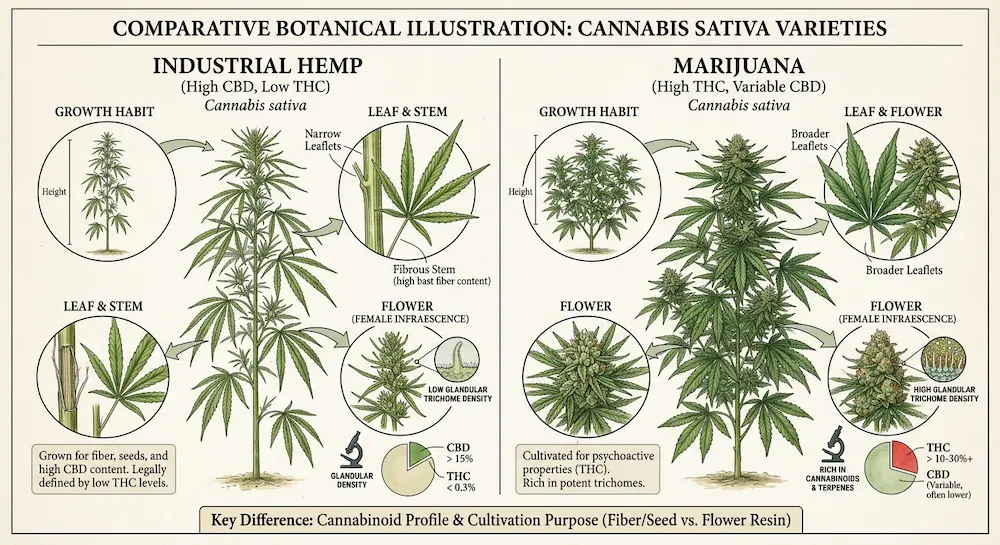
To understand CBD, you must understand the distinction between hemp and marijuana—two varieties of the same plant species (Cannabis sativa).
- Industrial Hemp: Cannabinoid-rich plant containing 0.3% THC or less by dry weight.
- Marijuana: Cannabis containing higher concentrations of THC (often between 5% and 30%).
Most commercially available CBD products are extracted from industrial hemp. Because hemp-derived CBD contains trace amounts of THC, it does not induce euphoria or intoxication. According to the World Health Organization (WHO), CBD exhibits no potential for abuse or dependence and is generally well-tolerated by humans.
How Does CBD Work? The Endocannabinoid System (ECS)
To understand what CBD does, you first need to understand how your body regulates itself.
Inside every human body—as well as most mammals—lies a vast cell-signaling network called the Endocannabinoid System (ECS). Discovered in the early 1990s, the primary role of the ECS is to maintain homeostasis (internal balance) across various biological functions, including:
- Pain perception and inflammation
- Mood, anxiety, and stress responses
- Sleep and circadian rhythms
- Immune system function
- Appetite and digestion
The Receptors: CB1 and CB2
The ECS relies on messengers and receptors to keep your body balanced:
- CB1 Receptors: Concentrated heavily in the brain and central nervous system. They influence mood, memory, pain processing, and motor control.
- CB2 Receptors: Found mostly in the immune system, peripheral organs, and white blood cells. They control inflammation and tissue responses.
Unlike THC, which binds directly to CB1 receptors in the brain (causing a high), CBD does not bind directly to CB1 or CB2 receptors in a strong key-in-lock fashion. Instead, it acts as a modulator.
CBD subtlely influences these receptors and prevents the breakdown of your body’s naturally produced cannabinoids (endocannabinoids like anandamide, often called the "bliss molecule"). Additionally, CBD interacts with serotonin receptors (5-HT1A), vanilloid receptors (TRPV1), and GPR55 receptors, explaining its broad spectrum of effects on mood, pain signals, and body temperature.
What Does CBD Do? Core Science-Backed Benefits
While marketing claims around CBD can sometimes outpace hard science, clinical studies and real-world trials have confirmed several key health applications.
| Target Benefit | Mechanism of Action | Evidence Level |
|---|---|---|
| Seizure Reduction | Modulates neural excitability and calcium signaling | FDA Approved (Epidiolex) |
| Anxiety & Stress | Modulates neural excitability and calcium signaling | High (Clinical & Preclinical) |
| Pain & Inflammation | Desensitizes TRPV1 receptors; inhibits pro-inflammatory cytokines | Moderate to High |
| Sleep Support | Reduces anxiety triggers; supports circadian balance | Moderate |
| Neuroprotection | Fights oxidative stress and neuroinflammation | Emerging |
Relief from Chronic Pain and Inflammation
Pain management remains one of the primary reasons people seek out CBD.
Traditional pain medications, such as opioids or NSAIDs, carry risks of addiction or stomach ulceration with long-term use. CBD offers a alternative pathway by targeting underlying inflammation rather than just masking discomfort.
- Neuropathic Pain: Studies indicate CBD helps dampen nerve-related pain signaling, making it useful for conditions like sciatica, peripheral neuropathy, and multiple sclerosis.
- Arthritis & Joint Discomfort: Topical and oral CBD applications have been shown to reduce joint swelling, stiffness, and inflammatory cell accumulation.
- Fibromyalgia: Clinical evaluations demonstrate that cannabinoid therapies combining CBD and mild trace cannabinoids can help reduce total symptom scores and pain severity in fibromyalgia patients.
Reducing Anxiety and Stress
One of the most widely researched effects of CBD is its ability to calm an overactive nervous system.
By activating 5-HT1A serotonin receptors, CBD promotes a physiological relaxing effect without producing sedating or intoxicating side effects.
Clinical studies have highlighted CBD's potential in managing:
- Generalized Anxiety Disorder (GAD)
- Social Anxiety Disorder (SAD): Human clinical trials showed that a single dose of CBD significantly reduced anxiety, cognitive impairment, and discomfort during public speaking tasks.
- PTSD and Stress Relief: CBD aids in fear memory extinction, helping the brain unlearn stressful fear associations.
Improving Sleep Quality
Sleep disorders, including insomnia, are often linked to underlying issues like anxiety, chronic pain, or irregular circadian rhythms.
Rather than working as a knock-out sedative, CBD acts on the factors disrupting sleep. By helping lower cortisol levels and relaxing physical tension, CBD helps users fall asleep faster and stay in deep, restorative sleep longer.
Treatment-Resistant Epilepsy (FDA-Approved)
The most definitive proof of CBD’s medical effectiveness is Epidiolex, a purified CBD oral solution approved by the U.S. Food and Drug Administration (FDA). Epidiolex is prescribed for severe, rare forms of epilepsy—such as Lennox-Gastaut syndrome, Dravet syndrome, and tuberous sclerosis complex. Clinical trials showed that CBD dramatically reduced seizure frequency where conventional anti-epileptic drugs failed.
Skin Health and Anti-Inflammatory Skincare
Topical CBD has gained popularity in dermatology. The skin is packed with ECS receptors. Applied topically, CBD helps:
- Control Acne: CBD regulates sebum (oil) production in sebaceous glands and reduces acne inflammation.
- Soothe Eczema & Psoriasis: Its anti-inflammatory properties help calm red, irritated, or flaking skin patches.
Types of CBD Extracts: Spectrum Breakdown
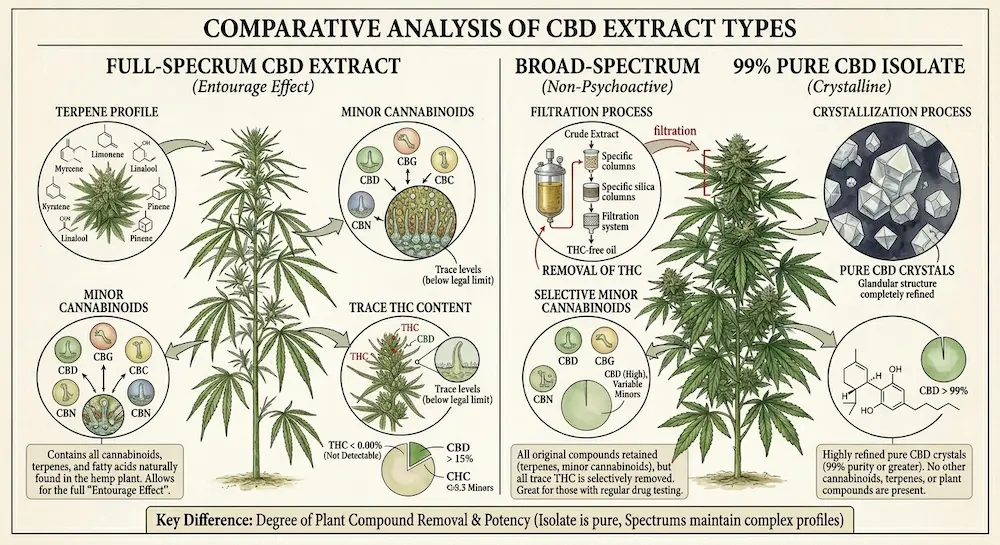
When shopping for CBD, you will encounter three main spectrum formulations. Knowing the difference ensures you choose the right product for your needs:
-
Full-Spectrum CBD:Contains all naturally occurring cannabinoids, terpenes, flavonoids, and essential fatty acids found in hemp, including up to 0.3% THC.
- Why choose it? Produces the "Entourage Effect"—a synergistic phenomenon where cannabinoids and terpenes work better together than in isolation.
-
Broad-Spectrum CBD: Contains the full array of beneficial cannabinoids and terpenes, but undergoes a refining process to remove 100% of THC.
- Why choose it? Ideal for those who want the Entourage Effect without any trace of THC due to workplace drug screenings or personal preference.
-
CBD Isolate: Pure, isolated cannabidiol with all other plant compounds completely stripped away (usually 99% pure powder or crystal).
- Why choose it? Perfect for users sensitive to other hemp components or those making custom formulations.
Delivery Methods and How to Use CBD
How you consume CBD affects how quickly it takes effect and how long those effects last:
-
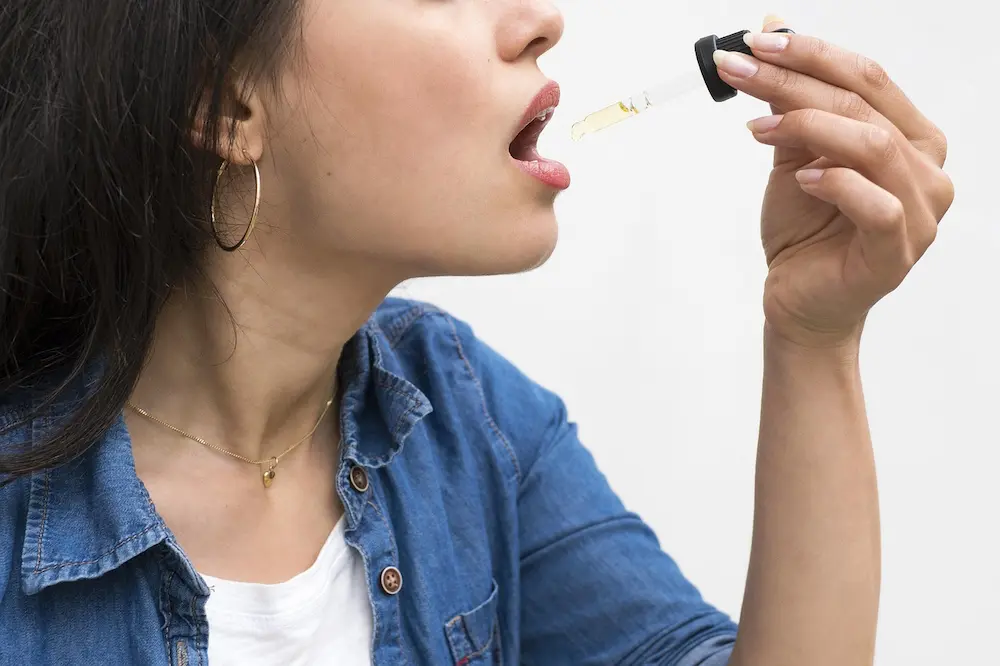
Sublingual Tinctures (Oils): Dropped under the tongue and held for 60 seconds before swallowing.
- Onset: 15–30 minutes | Duration: 4–6 hours
- Edibles & Capsules: Gummies, softgels, or infused foods that pass through the digestive system.
- Onset: 45–90 minutes | Duration: 6–8 hours
- Topicals: Creams, salves, and balms applied directly to skin, muscles, or joints.
- Onset: 15–30 minutes | Duration: Localized relief for 2–4 hours
- Inhalation (Vapes/Flower): Inhaled into the lungs for near-instant absorption into the bloodstream.
- Onset: 1–3 minutes | Duration: 1–2 hours
Dosage, Safety, and Potential Side Effects
Finding the Right Dose
CBD affects everyone differently based on body weight, metabolism, internal chemistry, and the severity of symptoms.
Rule of Thumb: "Start low and go slow."
A common starting dose is 10 to 20 mg per day. Maintain this baseline for 5–7 days to gauge how your body responds before gradually increasing your dosage by 5 to 10 mg as needed.
Potential Side Effects
CBD is generally considered safe, but mild side effects can occur—especially at high doses. These may include:
- Dry mouth
- Mild drowsiness or fatigue
- Appetite changes
- Light gastrointestinal upset or diarrhea
Important Drug Interactions
CBD is metabolized in the liver by the cytochrome P450 (CYP450) enzyme family—the same system responsible for breaking down over 60% of prescription pharmaceuticals.
If you take medications carrying a "grapefruit warning" (such as blood thinners, statins, or blood pressure drugs), consult your physician before starting CBD, as it may affect how your body processes those medications.
How to Buy Quality CBD Products (Buyer's Checklist)
Because the market for over-the-counter CBD products remains largely unregulated, product quality can vary wildly. Use this checklist to protect your health and your wallet:
- Third-Party Lab Reports (COAs): Never purchase CBD without a accessible Certificate of Analysis from an independent testing laboratory verifying potency and checking for heavy metals, pesticides, mold, and residual solvents.
- Hemp Source: Choose products made from organically grown, domestically sourced industrial hemp.
- THC Compliance: Ensure full-spectrum options explicitly state they comply with the legal requirement of less than 0.3% THC.
- Clear Labeling: Look for clear total milligram counts of CBD per bottle and per serving.
Summary: The Future of CBD Science
So, what is CBD and what does it do?In short, CBD is a versatile, non-intoxicating plant compound that works in tandem with your body’s natural regulation system. Rather than forcing a radical shift in brain chemistry, CBD helps support balance (homeostasis), helping relieve anxiety, ease inflammation, improve sleep quality, and support overall health.
As research expands, our understanding of this natural compound will continue to evolve, opening new doors for personalized, plant-based wellness treatments.