

Choosing the Best Cannabis Strains for Small Indoor Grow Setups
Growing cannabis at home can be an incredibly rewarding experience. However, not everyone has the luxury of a dedicated basement, a large spare room, or a massive 5x5 grow tent. For urban gardeners, apartment dwellers, or growers who value discretion, space is often the biggest limiting factor.
The good news is that you don't need a sprawling garden to cultivate premium top-shelf bud. By choosing small cannabis plants for indoor grow setups and understanding how to manage compact canopies, you can achieve impressive harvests even inside a closet, a micro-tent, or a stealth cabinet.
In this comprehensive guide, we will explore why compact genetics matter, highlight the best cannabis strains for small indoor grow environments, and share expert training techniques to help you maximize every square inch of your space.
Why Choose Small Cannabis Plants for Indoor Grow?
When growing indoors with restricted vertical clearance, attempting to cultivate tall, lanky strains (like pure Sativas) can quickly turn into a nightmare. Plants that stretch too close to grow lights risk heat stress, light burn, and severe space crowd.
Selecting smaller, short-stature cultivars offers several clear advantages:
- Discretion and Stealth: Short plants are easier to hide in closets, small grow cabinets, or micro-tents.
- Better Light Efficiency: LED and HID grow lights lose intensity as distance increases. Compact canopies allow all bud sites to sit within the light's sweet spot.
- Manageability: Smaller plants require less vertical management, making them perfect for low-ceiling environments.
- Faster Turnarounds: Compact Indica and autoflowering strains generally have shorter vegetative and flowering cycles, letting you harvest faster.
What Makes a Strain Ideal for Small Spaces?
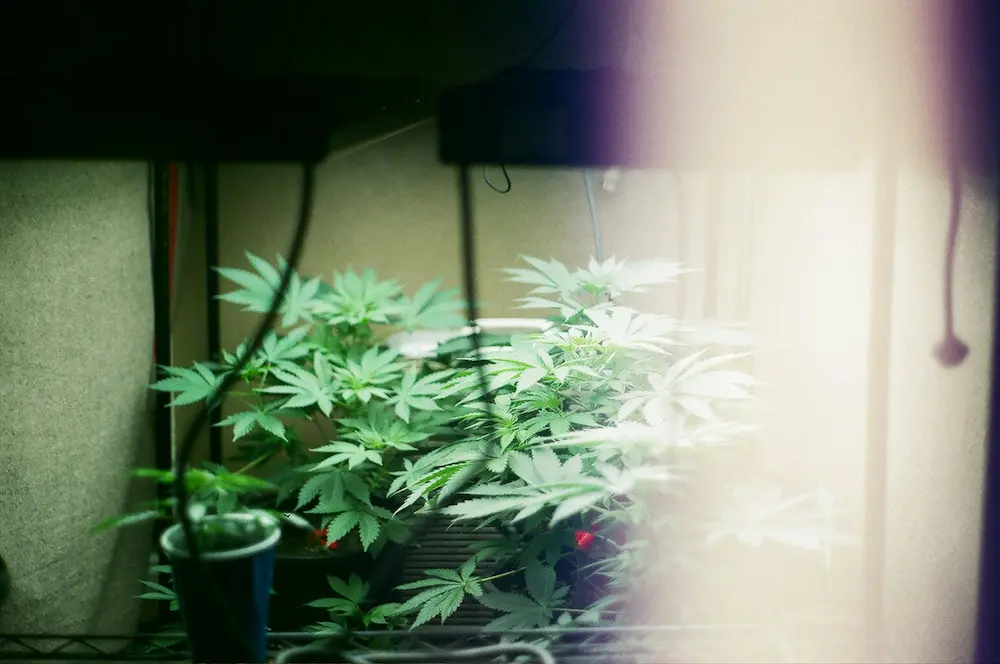
When searching for cannabis strains for small indoor grow projects, you should pay attention to two main factors: genetics and growth habit.
Indica-Dominant Genetics
Indica strains naturally grow short, bushy, and wide with broad leaves. Unlike Sativas—which can double or triple in height during the flowering stage—Indicas experience minimal "stretch" after the light cycle flips.
Autoflowering Ruderalis Genetics
Autoflowers automatically switch from vegetative growth to flowering based on age rather than light cycles. Because Cannabis ruderalis naturally evolved in harsh, short-season environments, autoflowering plants remain inherently small, typically reaching between 50 cm and 100 cm in height.
Best Cannabis Strains for Small Indoor Grow
To help you choose the right plant for your setup, here are some of the top-performing, high-yielding, and naturally compact cannabis strains for small indoor grow setups:
Northern Lights (Photoperiod or Autoflower)
- Average Height: 60 – 100 cm
- Genetics: Pure Indica / Ruderalis hybrid
- Best For: Absolute beginners and stealth growers
Northern Lights is a legendary strain that has set the standard for indoor cultivation for decades. It is famous for its compact structure, low odor profile during growth, and high resilience to environmental stress. The autoflowering version stays very low to the ground while producing dense, resinous colas.
Get Northern Lights feminized autoflower seeds and get 10 moreRoyal Dwarf Auto
- Average Height: 40 – 70 cm
- Genetics: Skunk x Ruderalis
- Best For: Micro-grows and limited vertical height
As the name implies, Royal Dwarf is bred specifically for tight quarters. Often referred to as a "bonsai cannabis," this strain stays exceptionally short while still delivering surprisingly solid yields of uplifting, skunky flower.
Critical Kush Auto
- Average Height: 60 – 90 cm
- Genetics: Critical Mass x OG Kush x Ruderalis
- Best For: High yields in limited space
If you don't want to compromise on yield just because you are growing in a small space, Critical Kush Auto is an ideal choice. It combines the heavy yields of Critical with the potency of OG Kush into a compact, bushy plant that fills out horizontally rather than vertically.
Check out these Critical autoflower seeds and get 10 more for freeGirl Scout Cookies (GSC) Auto
- Average Height: 60 – 100 cm
- Genetics: Indica-dominant hybrid
- Best For: High potency and sweet, earthy terpenes
GSC is famous for producing rock-hard, frosted buds with minimal vertical stretching. It responds exceptionally well to basic plant training, making it easy to create a flat, even canopy inside a small tent.
Check out Girl Scout Cookies autoflowering seeds and get 10 extra for freeBlue Mystic
- Average Height: 60 – 100 cm
- Genetics: Oregon Blueberry x Northern Lights
- Best For: Low stretch and subtle aromas
Blue Mystic grows short-stacked with almost bonsai-like vertical growth. Because it expands sideways rather than upward, it is ideal for growers managing low ceiling heights. Additionally, its soft berry aroma makes it discreet during the flowering stage.
Strain Comparison Matrix
| Strain | Height Range | Type | Flowering / Cycle Time | Key Advantage |
|---|---|---|---|---|
| Royal Dwarf Auto | 40 – 70 cm | Autoflower | 8 – 9 weeks (seed-to-harvest) | Ultra-compact, ideal for micro-tents |
| Northern Lights Auto | 60 – 100 cm | Autoflower | 9 – 10 weeks (seed-to-harvest) | Beginner-friendly, low odor |
| Critical Kush Auto | 60 – 90 cm | Autoflower | 8 – 10 weeks (seed-to-harvest) | High yield potential per square meter |
| Girl Scout Cookies Auto | 60 – 100 cm | Autoflower | 9 – 10 weeks (seed-to-harvest) | Dense bud formation, low stretch |
| Blue Mystic | 60 – 100 cm | Photoperiod | 8 – 9 weeks (flowering) | Horizontal growth habit, discreet scent |
5 Essential Tips for Growing Small Cannabis Plants Indoors
Even when growing small cannabis plants for indoor grow spaces, poor canopy management can lead to unexpected height issues. Follow these proven cultivation techniques to keep your plants short, healthy, and high-yielding:
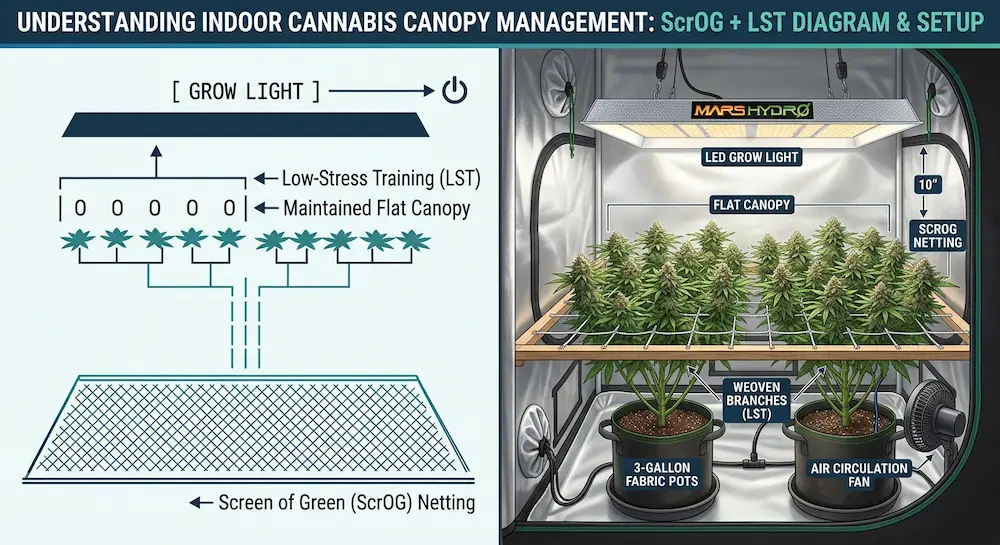
Master Low-Stress Training (LST)
Low-Stress Training involves gently bending and tying down the main stem and branches during the vegetative stage.
- Why it works: By keeping the top of the plant level with lower branches, you break apical dominance.
- The result: The plant spreads horizontally instead of vertically, creating multiple main bud sites without increasing height.
Utilize the Sea of Green (SOG) Method
The Sea of Green technique relies on growing multiple small cannabis plants for indoor grow setups side-by-side in small pots, rather than growing one large plant.
- Why it works: Switching photoperiod plants to flower early (or using compact autoflowers) keeps individual plants small while maximizing total canopy coverage and total yield.
Choose the Right Container Size
Pot size directly influences plant height. If you put a plant in a 5-gallon container, its root system will expand, triggering substantial top growth.
- For small indoor grows, stick to 1 to 3-gallon pots (4 to 11 liters). Fabric pots are ideal because they air-prune roots, preventing plants from becoming root-bound while controlling overall plant stature.
Optimize Light Distance and Spectrum
If your grow light is placed too far away from the canopy, your plants will stretch upward searching for light, resulting in long node spacing and taller plants.
- Keep quality LED grow lights at the manufacturer's recommended distance to encourage tight internodal spacing.
- Cool white or blue-spectrum light during vegetative growth also keeps node spacing tight and compact.
Control Vegetative Time (Photoperiod Strains)
If you grow photoperiod strains instead of autoflowers, remember that you control when the plant starts flowering. Flip your light schedule from 18/6 to 12/12 early—typically when the plant reaches about 30–40% of your maximum target height—to accommodate the flowering stretch.
Final Thoughts
Growing in restricted spaces does not mean you have to settle for small yields or sub-par quality. By selecting the best cannabis strains for small indoor grow setups—such as Northern Lights, Royal Dwarf, or Critical Kush—and applying simple training techniques like LST, you can cultivate dense, potent, high-quality harvests in any compact space.
Focus on controlling vertical growth early, maintain proper lighting, and let genetics work in your favor.