
The Great Smoke-Off: Why Material Matters for Your Daily Session
When it comes to setting up your smoking station, few choices are as fundamental as the material of your water pipe. Whether you are stepping up from hand pipes for the first time or looking to add a reliable daily driver to your collection, the debate between glass and acrylic bongs remains a classic. Both materials have carved out a permanent place in cannabis culture, but they cater to entirely different styles of smoking.
Selecting the right water pipe involves more than just picking a cool color or a sleek shape. Factors like flavor purity, long-term durability, cleaning routines, and budget all play a crucial role. This guide breaks down everything you need to know about glass versus acrylic bongs to help you decide which one belongs in your rotation.
The Contenders at a Glance
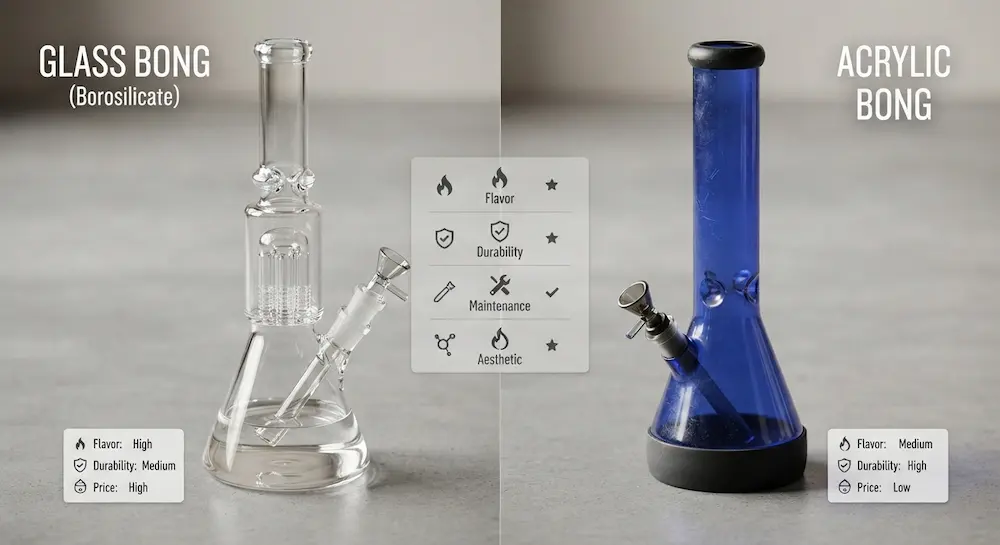
Before diving deep into the nuances, let's look at how these two materials stack up side by side.
| Feature | Glass Bongs (Borosilicate) | Acrylic Bongs |
|---|---|---|
| Flavor Purity | Pristine, neutral, and unadulterated | Good, but can retain subtle tastes over time |
| Durability | Vulnerable to shattering if dropped | Highly shatter-resistant and rugged |
| Price Point | Varies widely from budget to luxury | Consistently inexpensive and budget-friendly |
| Filtration & Pergs | High versatility (tree percs, honeycombs, etc.) | Generally basic, straightforward chamber designs |
| Maintenance | Easy to deep-clean with isopropyl alcohol | Requires gentle care; sensitive to harsh chemicals |
Glass Bongs: The Gold Standard for Flavor and Filtration
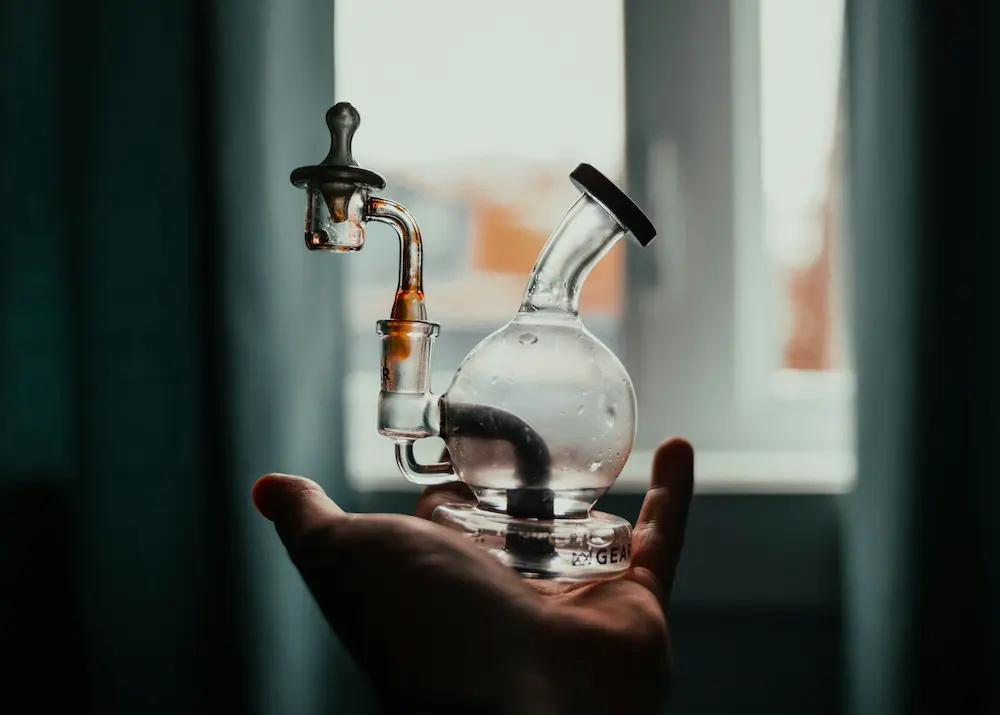
For many connoisseurs and daily smokers, glass is the undisputed king of smoking accessories. High-end water pipes are typically crafted from borosilicate glass—the same material used in scientific laboratory glassware. Borosilicate is specifically engineered to withstand high thermal shock and rapid temperature changes without cracking.
Why Smokers Choose Glass
- Unmatched Flavor Preservation: Glass is a chemically inert and non-porous material. This means it doesn't interact with the smoke or absorb organic residues over time. When you take a rip from a clean glass piece, you taste your flower’s distinct terpene profile exactly as nature intended.
- Advanced Filtration and Percolators: Because glass can be blown and shaped into complex interior geometries, it is the premier material for advanced diffusion. If you want honeycomb percolators, inline percs, multi-chamber setups, or built-in ice catchers, glass is where you will find them. These features break down smoke into smaller bubbles, drastically cooling the hit before it reaches your lungs.
- Aesthetic Appeal: Glass pieces are functional works of art. From minimalist scientific beakers to intricate color-swirled masterpieces, a clean glass bong looks great sitting out on a coffee table.
Check out our selection of bongs.
The Drawbacks of Glass
The primary disadvantage of glass is obvious: it breaks. Even thick, heavy-duty borosilicate glass can chip, crack, or shatter if it takes an unfortunate tumble onto a hard hardwood floor or patio tile. Furthermore, quality glass pieces generally carry a higher upfront price tag.
Acrylic Bongs: The Tough, Budget-Friendly Workhorse
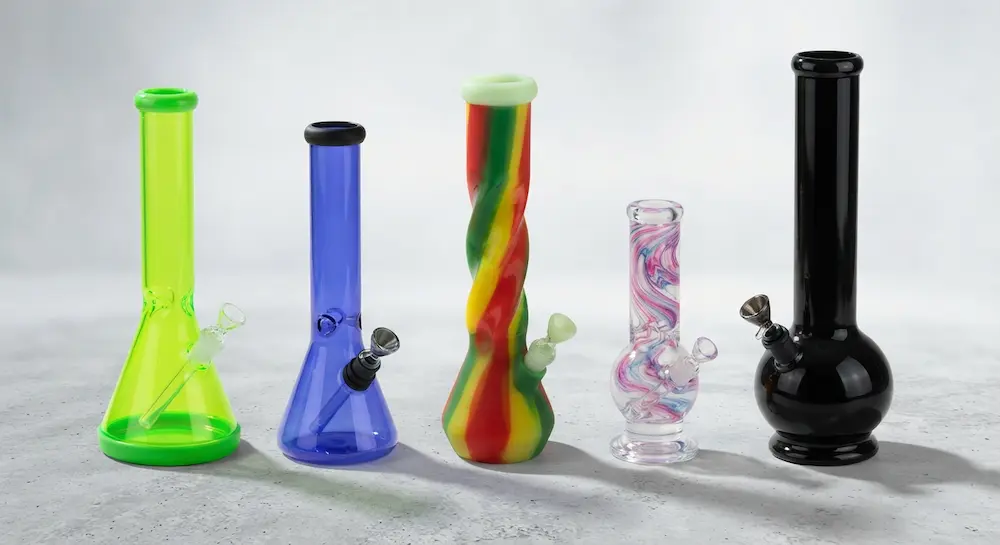
Acrylic bongs have been a staple of smoke shops and college dorm rooms for decades. Made from durable, rigid plastic, these water pipes prioritize practical utility, ruggedness, and affordability above all else.
Why Smokers Choose Acrylic
- Unbeatable Durability: Acrylic is resilient. If you accidentally knock an acrylic bong off a table or drop it while packing it into a backpack for a camping trip, it is almost certain to survive. This makes acrylic the ultimate choice for outdoor adventures, music festivals, or lively social gatherings.
- Wallet-Friendly Price: If you are shopping on a tight budget, acrylic wins hands down. You can pick up a fully functional acrylic water pipe for a fraction of the cost of a comparable glass piece.
- Lightweight and Portable: Acrylic pieces are feather-light, making them easy to pass around a circle or stash away out of sight when not in use.
The Drawbacks of Acrylic
While tough, acrylic comes with distinct performance compromises:
- Impact on Taste: Plastic is porous compared to glass. Over time, acrylic can absorb resin odors and subtle flavor notes, occasionally imparting a faint plastic aftertaste, especially when the piece is brand new or aging.
- Limited Filtration: You won't find intricate multi-tier percolators in standard acrylic bongs. Their designs are usually limited to straightforward downstems and simple bubble bases.
- Wear and Tear: Acrylic scratches much more easily than glass. Over months of scrubbing and use, tiny micro-scratches develop on the interior, which trap residue and cause the material to look cloudy or hazy.
Cleaning and Maintenance Face-Off
How you maintain your water pipe heavily dictates how long it will last and how enjoyable your sessions will be.
Cleaning Glass
Glass is a dream to clean. Because the surface is entirely non-porous, resin and ash sit on top of the material rather than soaking into it. Pouring standard isopropyl alcohol (91% or higher) and coarse sea salt into a glass bong and giving it a vigorous shake will strip away months of buildup in minutes, leaving the glass looking brand new.
Cleaning Acrylic
Cleaning acrylic requires a bit more caution. Never use high-concentration isopropyl alcohol on acrylic bongs. Alcohol causes a chemical reaction known as crazing, which creates a web of micro-cracks, weakens the plastic, and ruins the piece. Instead, you must use warm soapy water, baking soda pastes, or specialized non-alcohol acrylic cleaners to gently scrub the interior without scratching the walls.
Head-to-Head Scenarios: Which Should You Buy?
To figure out which material matches your lifestyle, consider how and where you typically smoke.
Choose an Acrylic Bong If:
- You are accident-prone: If you have butterfingers or a chaotic household where pieces frequently get knocked over, acrylic will save you money on replacements.
- You travel frequently: If your smoking gear needs to survive road trips, camping weekends, or music festivals, a lightweight, shatter-proof acrylic piece is a trustworthy companion.
- You want a low-cost backup: Many veteran smokers keep a cheap acrylic piece hidden in a closet as a reliable backup plan for when guests are over.
Choose a Glass Bong If:
- Flavor is your top priority: If you invest in top-shelf, terpene-rich flower, you owe it to yourself to taste every nuanced note through clean, neutral glass.
- You love smooth, filtered hits: If you want ice catchers, intricate percolators, and heavy water diffusion to cool down massive rips, glass is your only viable option.
- You want a piece that lasts for years: With proper care and regular cleaning, a quality glass bong can last a lifetime, whereas acrylic will eventually need to be replaced due to clouding and wear.
Final Verdict
The "best" bong material ultimately comes down to a trade-off between practicality and performance. Acrylic wins on upfront affordability, lightweight portability, and pure durability. Glass wins decisively on flavor purity, smooth filtration, aesthetic elegance, and long-term satisfaction.
If your budget allows for it and your sessions mostly happen at home, investing in a solid borosilicate glass water pipe delivers an objectively superior smoking experience. However, if you need an indestructible travel buddy that won't break your heart (or your bank account) if it takes a fall, an acrylic piece remains a practical tool for the job.