
How To Germinate Cannabis Seeds Using Paper Towel Method
Sourcing Your Seeds
When it comes to getting marijuana seeds, you have a couple of different routes. Historically, many growers found their start using random seeds pulled from a baggie of street weed. While these can work in a pinch, they are rarely top-tier genetics. Instead, most modern growers strongly suggest buying seeds online from a trusted seed bank. Ordering online gives you access to high-quality feminized seeds (which reliably produce female, bud-producing plants) or autoflowering varieties tailored to your exact preferences.
- Digital Plant Hygrometer – Keeping a close eye on your ambient temperature is vital for successful sprouting.
- Precision Stainless Steel Tweezers – Essential for handling delicate seeds and taproots without contaminating or crushing them.
Why Use the Paper Towel Method for Germinating Cannabis Seeds?
The paper towel method remains one of the most popular, time-tested techniques in cultivation. It mimics natural moisture levels while offering an exceptionally high success rate, making it ideal for beginners because it requires very few household resources.
To get started with this method, gather the following supplies:
- Quality cannabis seeds
- Plain, unperfumed paper towels (avoid scented tissues or heavy dyes)
- Two clean plates
- Distilled or bottled water (room temperature)
Step-by-Step Guide: Germinating Cannabis Seeds
1st Step: Prep the Paper Towels
Take 2 to 4 sheets of plain paper towel and moisten them thoroughly with your water. Distilled or reverse-osmosis water is ideal because it lacks harsh mineral additives. Make sure the sheets are thoroughly soaked, but wring out any excess water. They should feel like a damp sponge—moist all the way through, but never dripping wet or pooling with standing water.
2nd Step: Position the Seeds
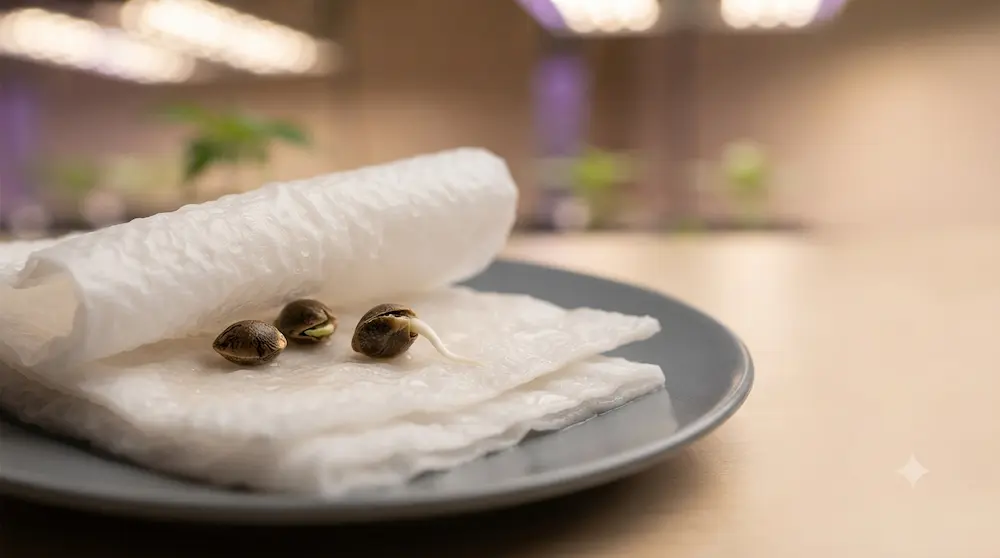
Place two of the dampened paper towel sheets flat onto the surface of one plate. Carefully lay your cannabis seeds out on the towel, leaving about an inch of space between each seed so their developing roots won't tangle. Cover the seeds with the remaining damp paper towel sheets, creating a snug, moist sandwich.
3rd Step: Create a Dark, Humid Microclimate
Take the second plate, flip it upside down, and place it over the first plate to form a covered dome. This blocks out all light and locks in critical humidity. Seeds do not need light to germinate at this stage; darkness and moisture are their primary cues.
4th Step: Maintain the Ideal Temperature
Place your covered plates in a warm, stable location. Temperature is one of the most critical factors: aim for a sweet spot between 70°F and 85°F (21°C to 29°C). Avoid cold tile floors or drafty windowsills, which can stall the process entirely.
Waiting and Watching for the Taproot
Once your setup is squared away, patience is key. Check on your paper towels every 24 hours to ensure they haven't started to dry out. If they look like they are losing moisture, mist them lightly with your distilled water spray bottle.
Most fresh, viable seeds will crack open and display a tiny white tail—known as the taproot—within 24 to 72 hours, though some stubborn strains can take up to 5 days.
- Sterility and Care: Keep things as clean as possible. Avoid touching the fragile white taproot with your bare fingers, as it will eventually grow into the main structural anchor and stem of your cannabis plant.
Transplanting Your Cannabis Sprouts
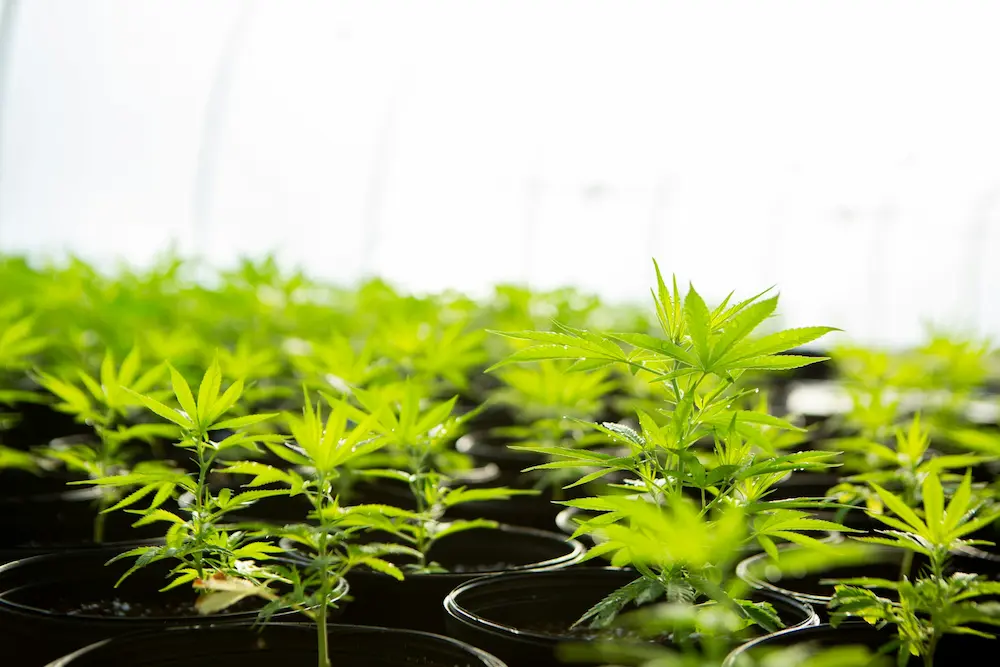
Once the taproot reaches roughly 1/4 to 1/2 inch (5 mm to 13 mm) in length, it is time to move your seeds into a growing medium. Do not wait too long, or the roots may grow directly into the paper fibers and snap during removal.
(Note: If you prefer an alternative approach that skips paper towels altogether, check out our guide on how to germinate cannabis seeds using peat pellets for a seamless soil-free transition.)
When you're ready to plant your freshly popped seeds, head over to read our complete guide on Transplanting Cannabis Plants to ensure your seedlings get the best possible start to their vegetative life.