
The Science of the Hang: Essential Steps for Drying Cannabis
After months of dialing in your nutrients, managing your lighting schedules, and tracking your environmental variables, you have finally crossed the finish line of your grow cycle. Chopping down your mature plants is a deeply rewarding milestone. You can practically taste those sweet, resin-packed colas at the back of your throat just by looking at the sparkling flowers.
However, your job as a cultivator isn't finished yet. How you handle drying cannabis is just as critical as anything you did during the vegetative or flowering stages. If you rush the drying process or mishandle your environment, you run the risk of destroying your hard-earned terpenes and leaving behind a harsh, grassy smoke. Learning how to dry marijuana the right way ensures that your finished flowers pack maximum potency, gorgeous aromas, and a silky-smooth inhale.
Drying vs. Curing: What Is the Difference?
Before grabbing your pruning shears, it helps to distinguish between the two main post-harvest phases: drying and curing.
Anyone with experience cultivating cannabis will tell you that you cannot simply snap a fresh cola off a living plant and smoke it immediately. While you technically can, it will taste acrid, burn unevenly, and feel disappointingly weak.
- Drying: This is the initial moisture-removal phase. It drives out the bulk of the water weight trapped inside the plant material so the flowers become stable and smokable.
- Curing: This is the secondary maturing process that follows. Curing slowly breaks down remaining chlorophyll and refines your cannabinoid profile over a matter of weeks or months—acting much like aging a fine wine.
Setting Up the Ideal Drying Environment
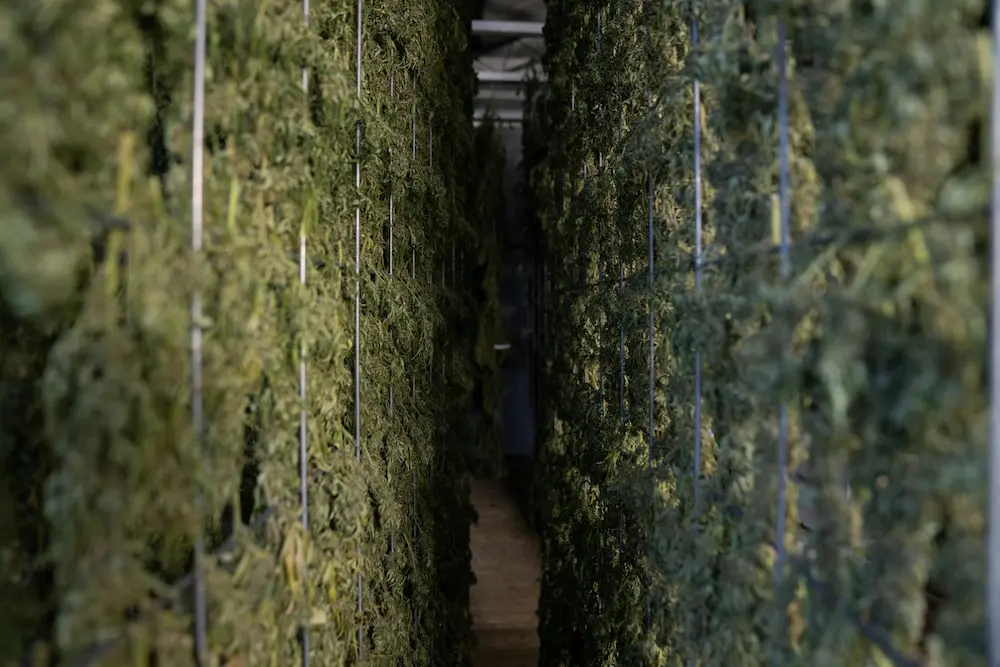
The secret to proper cannabis drying isn't a secret at all—it comes down to strict environmental control. The goal is a slow, gradual dry that takes anywhere from 7 to 14 days. If your environment is too hot or dry, your buds will flash-dry in 48 hours, trapping chlorophyll inside and ruining your flavor profile. If it is too damp, mold and bud rot will take over your harvest overnight.
The gold standard for a successful dry relies on a few fundamental rules:
- Total Darkness: Light is the enemy of freshly harvested weed. Ultraviolet light and direct sunlight break down delicate THC molecules, converting them into less potent compounds like CBN while giving your flowers a bleached, faded look.
- Target Temperature: Aim to keep your drying room around 60°F to 68°F (15°C to 20°C). Moderate warmth encourages steady evaporation, but excess heat will rapidly burn off your volatile aromatic terpenes.
- Controlled Humidity: Maintain a relative humidity (RH) of roughly 55% to 65%. To track these numbers accurately without guessing, keeping a digital indoor hygrometer and humidity monitor inside your space is an absolute game-changer.
- Gentle Airflow: Stagnant air invites mold, but a high-powered fan pointed right at your harvest will dry the outside while leaving the core damp. Set up a small oscillating fan to keep air moving around the room, ensuring it never blows directly onto the hanging flowers.
The Step-by-Step Process: How to Dry Marijuana
Once you have secured a dark, well-ventilated space—such as a spare room, a dedicated grow tent, or a climate-controlled closet—you are ready to process your harvest.
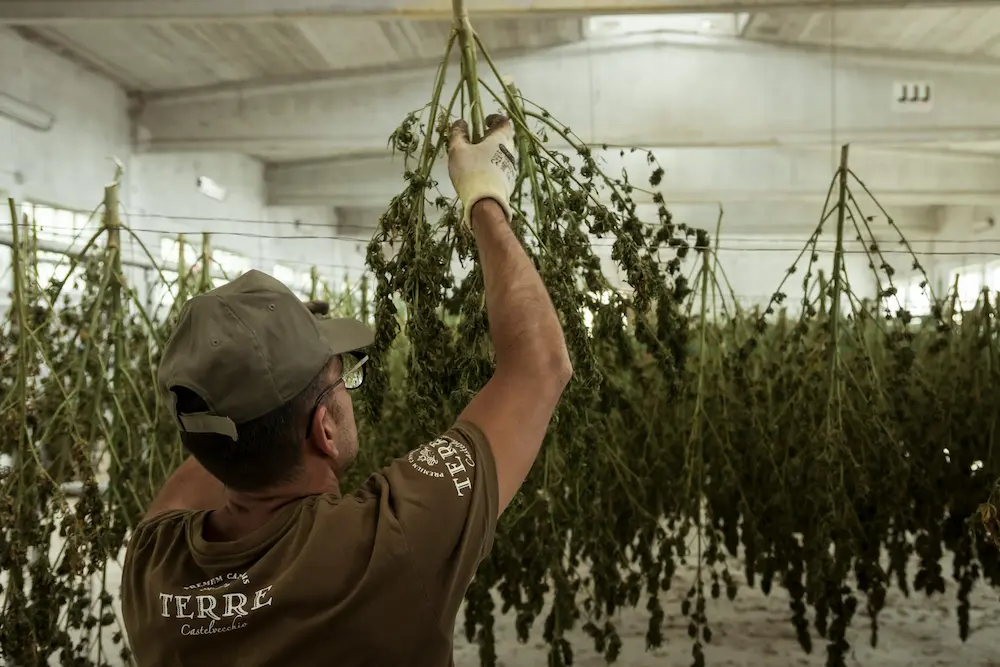
- Perform the Initial Prep: Right after cutting down your plants, strip away the large, moisture-heavy fan leaves. Depending on your preferred trimming style, you can either hang whole plants intact, break them down into individual branches, or trim them completely using a partial wet-trim method to manage local humidity levels.
- Rig Your Hanging Lines: Tie clean strings, wires, or use a collapsible mesh hanging herb drying rack across your room if you prefer flat drying layers over hanging full branches.
- Hang Your Branches: Suspend your branches or whole plants upside down. Make sure there is plenty of physical space and empty air gaps between individual colas. If buds are crammed tightly together, trapped moisture will form pockets of mold in the center of your densest colas.
- Monitor Daily: Check in on your drying room every single day. Track your hygrometer readings, look out for any early signs of web-like mold, and make gradual adjustments to your temperature or humidity controls if needed.
How to Know When Your Cannabis Is Dry
A common question among growers is figuring out the exact moment the drying process is complete. While timelines vary based on strain density and ambient climate, most harvests take roughly 7 to 10 days before they are ready for the next step.
Instead of relying purely on a calendar, use these physical tests to check your progress:
- The Stem Snap Test: Take a medium-sized stem and try to bend it. If it simply flexes or bends without breaking, there is still too much water inside the core. If it snaps cleanly with a crisp "crack" sound, your plant material has reached the ideal dryness threshold.
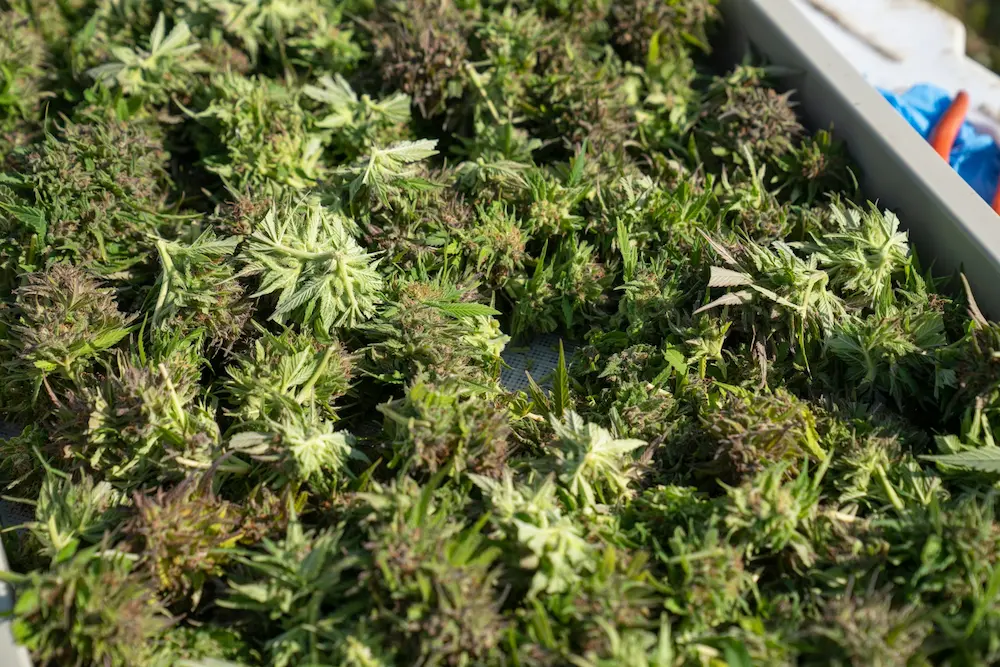
- Texture and Touch: The exterior of the buds should feel dry, light, and slightly crispy to the touch, while retaining a bit of spongy resilience when gently squeezed.
If you want to dive deeper into maximizing your yields from seed to harvest, be sure to read our detailed guides on our complete breakdown on growing cannabis indoors vs. growing cannabis outdoors.
What Comes Next?
Once your stems snap and your buds feel properly texturized, you are ready to transition your harvest out of the drying room. Packing your dried flowers into airtight glass storage containers marks the beginning of the curing phase. If you want your buds to reach their absolute peak potential in flavor and smoothness, make sure to read our comprehensive guide on how to cure cannabis for maximum potency and flavor. Take your time, monitor your environment closely, and enjoy the fruits of your labor!
Why 60/60 is NOT the gold STANDARD for dry/cure!
This video provides an alternative scientific perspective on traditional cannabis drying parameters and environmental targets.