
When Is the Best Time to Harvest Cannabis? Here’s the Quick Answer
You have spent weeks, sometimes months, feeding, watering and fussing over your plants. Now comes the question every grower asks: when is the best time to harvest cannabis?
Get it right and you are rewarded with dense, aromatic, potent flower. Get it wrong and all that effort can be undone in a few days. Cut too early and the buds are weak, grassy and thin. Cut too late and the effects turn heavy and sleepy, and the terpenes that give the flower its character begin to fade.
This guide explains exactly when is the best time to harvest cannabis, how to tell when your plants are ready, and how to fine-tune your timing for the effects you want. Whether you are a first-time home grower or a seasoned cultivator, you will find a clear, practical answer below.
Note: cannabis laws differ by country, state and region. Only grow where it is legal, and follow your local rules on plant counts and cultivation.
The Short Answer: When Is the Best Time to Harvest Cannabis?
The best time to harvest cannabis is when the trichomes (the tiny resin glands on the buds) have turned mostly cloudy (milky white) with a small share of amber, and most of the pistils (the little hairs) have darkened and curled in.
For most growers, the sweet spot looks like this:
- Mostly cloudy trichomes for peak potency and a bright, uplifting effect
- About 10–30% amber trichomes for a more balanced, relaxing effect
- Few or no clear trichomes, which indicate the flower is still immature
If you only remember one thing, remember this: trichomes tell you more than the calendar does. Breeder flowering times are a useful guide, but your plants decide when they are ready.
Why Harvest Timing Matters So Much
Cannabis flowers keep developing right up until the moment they are cut. During the final weeks, resin production peaks, cannabinoids such as THCA reach their highest levels, and terpene output (the source of aroma and flavor) is at its richest.
Harvest timing influences:
- Potency: Early harvests leave potential on the plant.
- Effects: The ripeness of the resin shapes how the flower feels (more on that below).
- Flavor and aroma: Terpenes are delicate and can degrade as plants over-ripen.
- Yield: Buds fatten significantly in the last one to two weeks of flowering.
- Smoothness: Properly ripened flower dries, cures and burns better.
Method 1: Check the Trichomes (The Most Reliable Way)
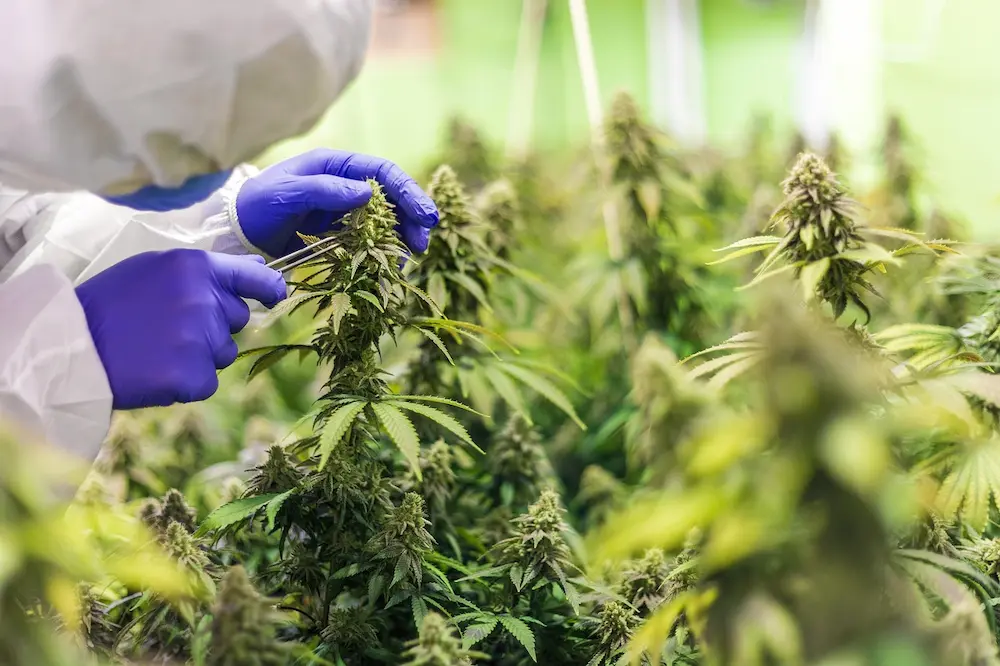
Trichomes are the best indicator of when to harvest weed. These mushroom-shaped glands produce the cannabinoids and terpenes you are growing for, and their color changes as the flower matures.
You cannot judge them by eye alone. Use a 60x–100x jeweler's loupe, a handheld microscope, or a smartphone clip-on macro lens. Look at the trichomes on the buds themselves, not the sugar leaves, which ripen earlier and give a misleading reading.
The Three Trichome Stages
1. Clear trichomes: too early. The glands look transparent and glassy. The plant is still building cannabinoids, and harvesting now means lower potency and a harsher, grassier smoke.
2. Cloudy (milky) trichomes: peak potency. The heads turn opaque and milky white. This is generally considered the stage of maximum THC content. Many growers aim to harvest when the majority of trichomes look like this.
3. Amber trichomes: past peak, more mellow. As the resin ages, heads shift to amber or gold. Over time THC slowly degrades, and some of it converts into other compounds such as CBN. Growers commonly describe flower with more amber as more relaxing and "body heavy."
What Trichome Ratio Should You Aim For?
There is no single perfect number, and sources vary a little, but these ranges are widely used among growers:
| Goal | Approximate trichome ratio | Typical result |
|---|---|---|
| Maximum potency, energetic feel | Mostly cloudy, roughly 0–10% amber | Bright, cerebral, uplifting |
| Balanced (the most popular choice) | Around 70–80% cloudy, 20–30% amber | Well-rounded, potent, smooth |
| Relaxing, evening use | Around 40–50% amber | Heavier, sedative, "couch-lock" |
If you are unsure, aim for mostly cloudy with a touch of amber. It is the safest, most popular answer to when is the best time to harvest pot.
A Quick Reality Check on the Science
The idea that amber trichomes "cause" a sleepy high is common grower wisdom, and there is a real logic behind it: THC degrades with age and CBN forms. But the amount of CBN in most harvested flower is small, and effects also depend heavily on the strain's terpene and cannabinoid profile, how you dry and cure it, and your own body. Treat the ratios as a useful steering tool, not a guarantee.
Method 2: Watch the Pistils
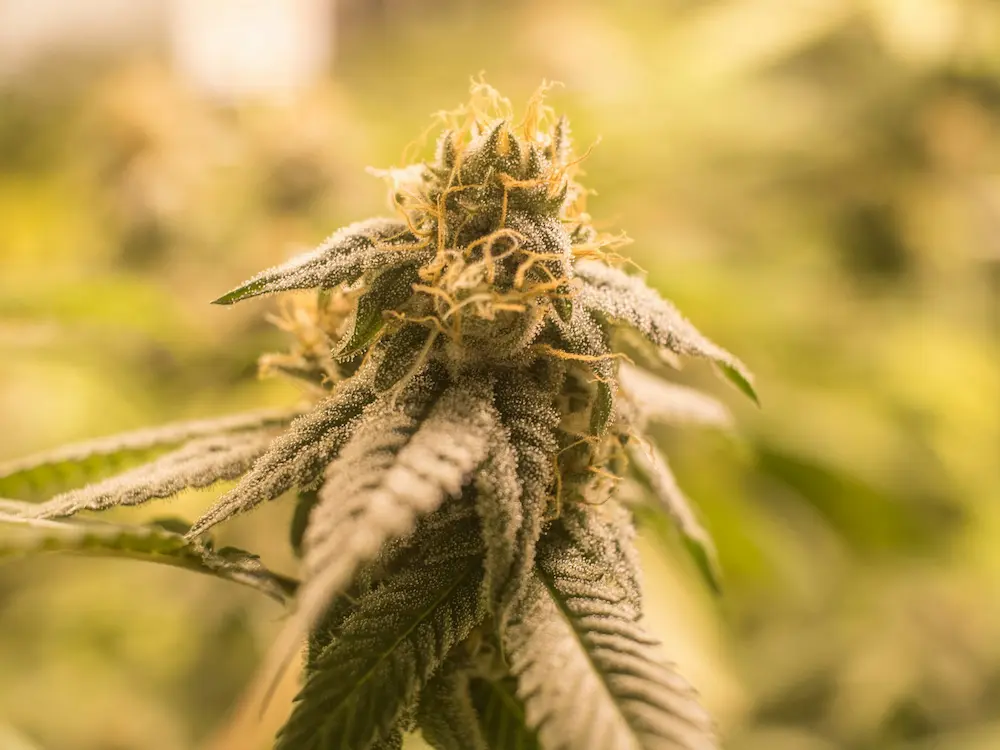
Pistils are the small hairs that emerge from the buds. Early in flower they are white and stick straight out. As the plant matures they darken to orange, red or brown and curl inward.
A common rule of thumb is to look for roughly 70–90% of pistils darkened and curled. Pistils are a helpful early warning that harvest is approaching, but they are less accurate than trichomes. Some strains keep bright pistils until late, and others darken early. Use pistils to know when to start inspecting trichomes, not to make the final call.
Method 3: Count the Flowering Weeks
Breeders list an expected flowering time for each strain, and this is a helpful planning tool.
- Indica-dominant strains: commonly around 7–9 weeks of flowering
- Hybrids: commonly around 8–10 weeks
- Sativa-dominant strains: commonly 10–14 weeks, sometimes longer
- Autoflowering strains: typically 8–12 weeks from seed to harvest (counted from germination, not from a light change)
The clock for photoperiod plants starts when you switch to a 12/12 light cycle (or when outdoor days shorten). Treat the listed number as an estimate. Genetics, temperature, light intensity and stress can shift ripeness by a week or more in either direction.
Method 4: Look at the Fan Leaves and Overall Plant
In the last couple of weeks, healthy plants often begin to yellow and drop older fan leaves as they pull nutrients into the flowers. This natural fade is normal and is not a reason to panic. Combined with swollen, aromatic buds and darkening pistils, it supports what the trichomes are already telling you.
Strong smell is another clue. As the plant ripens, aroma intensifies. Just be careful not to rely on smell alone.
When Is the Best Time to Harvest Weed Based on Your Goals?
Different growers want different outcomes. Here is how to match timing to purpose.
For a Clear-Headed, Energetic Effect
Harvest when trichomes are mostly cloudy with little or no amber. This tends to give a brighter, more active experience that many people prefer for daytime.
For a Balanced, All-Purpose Flower
Harvest at roughly 70–80% cloudy and 20–30% amber. This is the go-to window for most home growers and a safe choice if you are not sure what you want.
For Relaxation and Evening Use
Wait until about 40–50% of trichomes are amber. Expect a heavier, more sedative feel and slightly lower peak potency.
For Medical Preferences
Medical needs vary widely. If you are growing for symptom relief, talk to a qualified healthcare professional about which cannabinoid profile suits you, and consider testing your harvest if lab testing is available in your area.
Staggered Harvesting: A Pro Tip
The top buds (colas) receive more light and ripen before the lower, shaded branches. Instead of chopping the whole plant at once, some growers harvest in stages: take the ripe upper buds first, then give the lower buds another few days in better light. This can improve overall quality and gives you a mix of effects from a single plant.
Common Harvest Timing Mistakes
Harvesting too early. Impatience is the number one mistake. Wispy, clear-trichome buds will be weaker and harsher.
Relying only on pistil color. Pistils are helpful, but they are not precise.
Judging from sugar leaves. Sugar leaves ripen sooner than buds, so check the flowers themselves.
Inspecting without magnification. You cannot reliably tell cloudy from clear by eye. Always use a loupe or microscope.
Checking under colored light. Grow lights, especially purple or red-heavy ones, distort color. Check trichomes under neutral white light or natural daylight.
Waiting for "all amber." If most trichomes are amber, the flower is likely over-ripe and may feel flat or overly sedating.
Ignoring plant health. Bud rot (botrytis), pests or mildew can force an early harvest. If mold appears, remove affected buds right away to protect the rest.
Should You Flush or Do a Dark Period Before Harvest?
Two practices come up constantly in grow forums:
- Flushing means giving only plain, pH-balanced water for the last 1–2 weeks. Many growers swear it improves taste and smoothness, though evidence that it significantly changes the final product is mixed, and some growers skip it, especially in living soil.
- A 24–48 hour dark period before harvest is another popular tradition. It is widely practiced, but scientific support is limited, so treat it as optional.
Neither will fix a harvest that is cut at the wrong stage, so focus on trichomes first.
How to Harvest Cannabis Once It's Ready
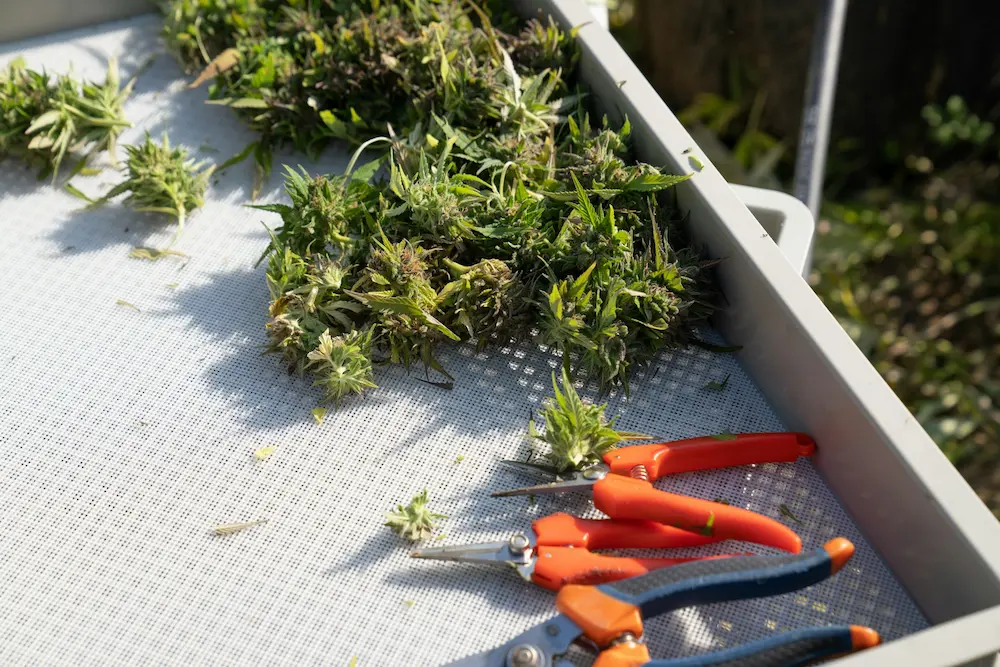
- Prepare your space. Clean tools, gloves, and a dry area to hang the plant.
- Cut the plant or branches. Many growers cut whole plants or large branches rather than individual buds.
- Trim (wet or dry). Wet trimming removes leaves right away; dry trimming happens after drying and can slow drying for a gentler result.
- Hang to dry. Aim for roughly 60°F / 15°C and 55–60% humidity for about 7–14 days, depending on bud size.
- Check the stems. Small stems should snap rather than bend.
- Cure in airtight jars. Open the jars daily at first ("burping") and then less often. Curing for at least 2–4 weeks improves flavor, smoothness and potency retention.
Good drying and curing matter just as much as good timing. Even perfectly timed flower can be ruined by drying too fast or too humid.
Related Articles: Wet vs Dry Trimming, How to Dry Cannabis, Curing Cannabis.
Autoflowers, Photoperiods and Outdoor Grows: Timing Differences
Autoflowering plants flower on their own schedule, so count from germination and still confirm with trichomes. They can ripen unevenly, so check several buds.
Photoperiod plants flower in response to light cycles. Indoors you control the schedule. Outdoors, harvest typically falls in early autumn to late autumn in the Northern Hemisphere, depending on the strain and local climate. In cool, damp regions such as Ireland and the UK, choose fast-finishing strains and watch closely for mold as nights get cold and wet. Harvest slightly earlier rather than risk losing buds to rot.
Quick Harvest Checklist
Before you cut, confirm that:
- You have reached or passed the strain's expected flowering window
- Most pistils are darkened and curled in
- Trichomes on the buds are mostly cloudy, with few or no clear ones
- Your preferred share of amber trichomes has been reached
- You checked several buds, top and bottom, with magnification
- Your drying space is prepared
Final Thoughts: The Best Time to Harvest Cannabis Is When the Plant Says So
So, when is the best time to harvest cannabis? When your trichomes are mostly cloudy with a measured amount of amber, your pistils have darkened and curled, and the plant has reached its expected flowering window. Use a loupe, check multiple buds, and match your timing to the effect you want.
Whether you are wondering when is the best time to harvest weed for a bright daytime strain or when is the best time to harvest pot for a relaxing nighttime flower, the principle is the same: patience and observation beat guesswork every time.
Take your time, trust your magnification, and your harvest will reward you.
Disclaimer: This article is for educational purposes only. Cannabis laws vary by location; always follow the laws that apply where you live. Consult a healthcare professional for medical guidance.