
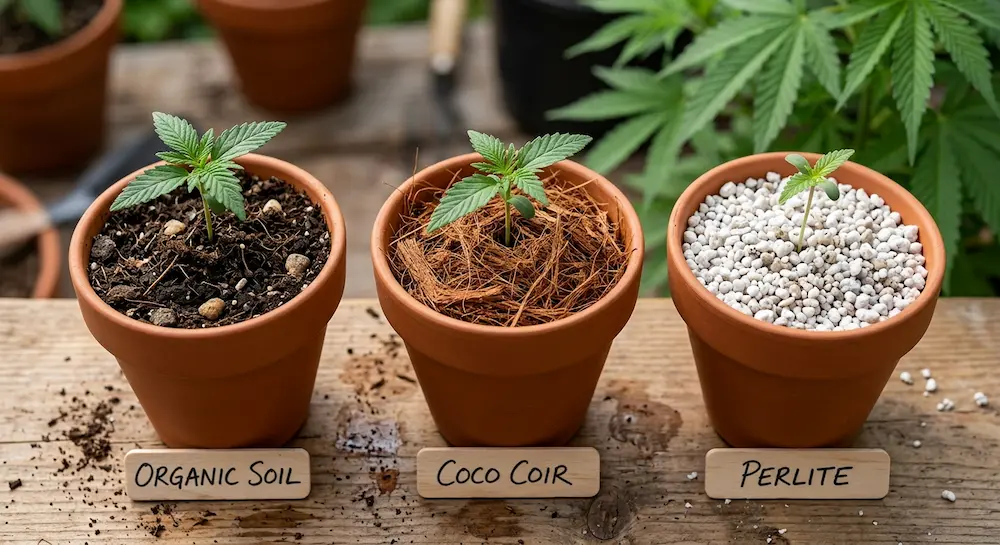

Different Cannabis Growing Mediums: Soil vs. Coco vs. Hydroponics
Choosing the right substrate for your plants is one of the most critical decisions you will make as a grower. When growers ask, "What is the best growing medium for cannabis?" the honest answer is that there isn't a single universal choice. The best option depends on your experience level, daily schedule, budget, and growing goals.
Whether you prefer traditional dirt, soilless coconut fibers, or full hydroponic setups, every substrate offers unique advantages and trade-offs. In this comprehensive guide, we will break down the different cannabis growing mediums, explore the pros and cons of each, and help you determine what is the best growing medium for weed based on your specific situation.
Understanding Growing Mediums: How They Work
A growing medium (or substrate) is the material in which your plant’s root system develops. It serves three primary functions:
- Physical Support: Anchoring the root network so the plant stays upright.
- Moisture Retention: Holding water for root absorption.
- Aeration: Supplying oxygen to the roots so they do not rot or suffocate.
When evaluating different weed growing mediums, you are balancing two main elements: water holding capacity and aeration (porosity). High-performing root systems require a healthy balance of both.
What Are the Types of Growing Mediums for Cannabis?
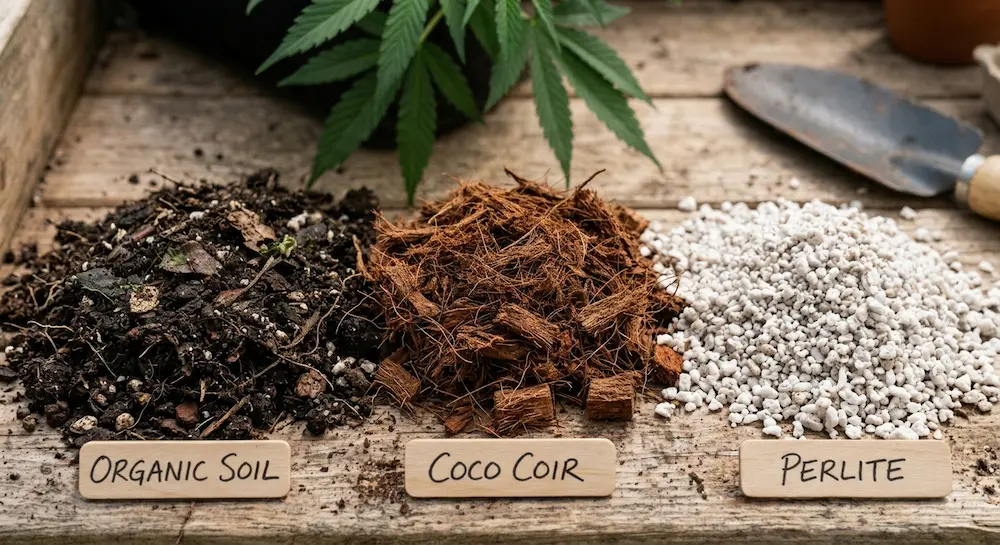
While there are dozens of custom blends available on the market today, almost all different marijuana growing mediums fit into three primary categories:
- Soil & Organic Living Soil
- Soilless Mixes (Coco Coir & Peat Moss)
- Hydroponics & Aeroponics
Let’s take a detailed look at how each of these types of growing mediums for cannabis performs.
Explore our in depth guides:
How to prepare cannabis soil for your outdoor grow
How to Grow Hydroponic Cannabis: The Comprehensive Guide to Weed Hydroponics
1. Organic Soil (The Classic & Forgiving Choice)
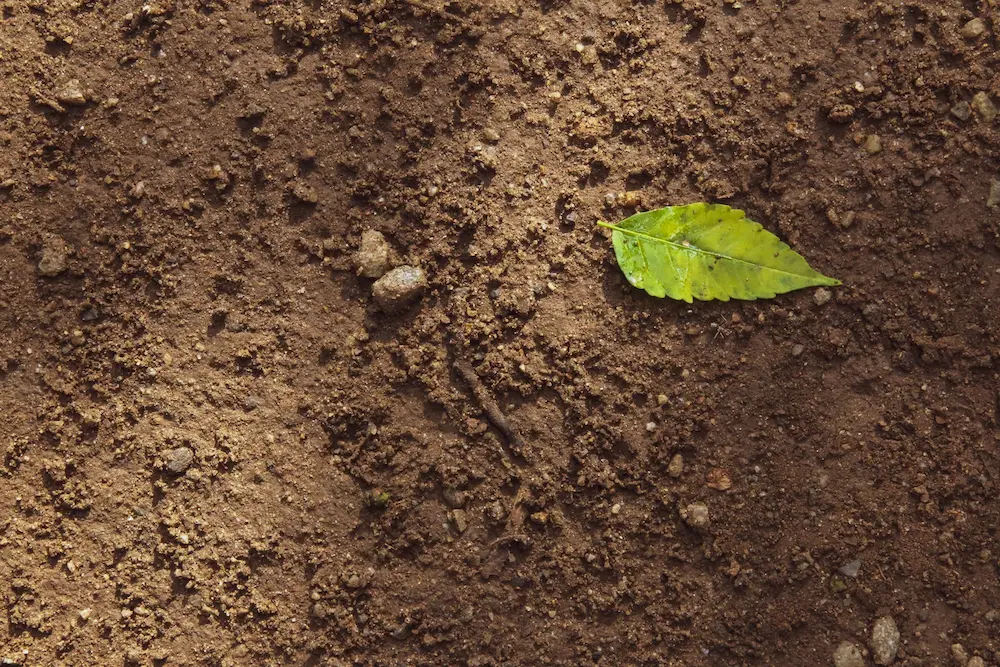
Soil is the most traditional and natural substrate for cultivating cannabis. If you are a beginner looking for a forgiving entry point, soil is almost always the recommended start.
How Soil Works
Unlike inert substrates, natural and organic soils contain microbial life—beneficial bacteria, mycorrhizal fungi, and organic matter. These microorganisms break down organic compounds (like worm castings, bat guano, and bone meal) into ionic nutrients that the roots can absorb.
Types of Soil Options:
- Light Potting Mixes: Pre-fertilized soils (e.g., FoxFarm Ocean Forest or Biobizz Light-Mix) that provide enough food for the first 3–4 weeks of growth. Afterwards, growers supplement with liquid nutrients.
- Living Soil / Super Soil: Heavily amended soil rich in organic material. With living soil, you usually only need to add plain water from seed to harvest ("just add water" growing).
Soil Pros & Cons
| Advantages | Disadvantages |
|---|---|
| High Natural Buffering: Organic matter cushions against pH swings and feeding mistakes. | Slower Growth Speed: Organic nutrient breakdown is slower than direct liquid feeding. |
| Rich Terpene Profiles: Many connoisseurs praise soil for producing nuanced flavor and aroma. | Pest Risk: Bagged soil can carry fungus gnats or soil-borne pests. |
| Low Maintenance: Requires watering only once every 2–4 days. | Lower Yield Ceilings: Generally yields slightly less per harvest than hydro or coco. |
- Ideal Target pH in Soil: 6.0 - 7.0
2. Coco Coir & Soilless Mixes (The High-Yield Hybrid)
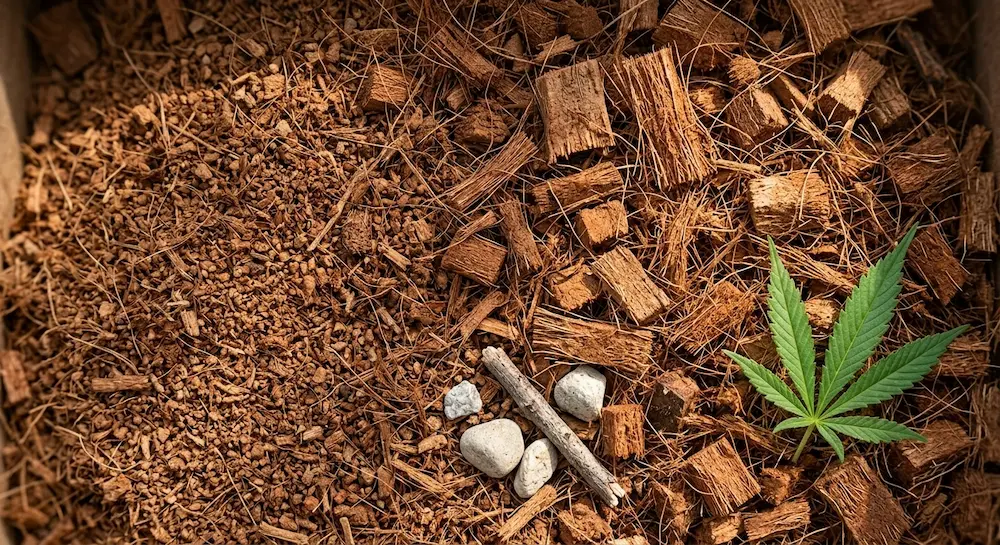
When asking experienced cultivators what is the best growing medium for marijuana, many will point directly to coco coir. Made from recycled coconut husks, coco coir looks and handles like rich black soil, but structurally behaves like hydroponics.
Why Coco Coir Is So Popular
Coco coir is an inert medium, meaning it contains zero inherent nutrients. You provide 100% of the plant's food through water-soluble nutrients with every irrigation (a practice known as fertigation).
Because coco holds an optimal ratio of water and air—even when fully saturated—it is nearly impossible to drown root systems. This oxygen-rich environment allows roots to expand at rates comparable to pure hydroponics.
Important Tip for Coco Coir Growers: Coco coir naturally binds to Calcium and Magnesium ions. Always use pre-buffered coco coir and supplement your feeding regimen with a quality Cal-Mag product to avoid leaf deficiency spots.
Coco Coir Pros & Cons
| Advantages | Disadvantages |
|---|---|
| Rapid Growth & High Yields: Delivers growth rates up to 30% faster than standard soil. | Requires Daily Care: Needs watering and feeding daily (sometimes twice daily in late flower). |
| Great Root Aeration: Excellent water retention without suffocating root tissue. | Requires Precise Monitoring: Must check pH and EC (electrical conductivity) regularly. |
| Pest-Resistant & Reusable: Inert and sterile, making it inhospitable to many soil bugs. | Dependency on Nutrients: Mistakes in nutrient dosing impact plants faster. |
- Ideal Target pH in Coco Coir: 5.5 - 6.5
3. Hydroponics & Aeroponics (Maximum Speed & Precision)
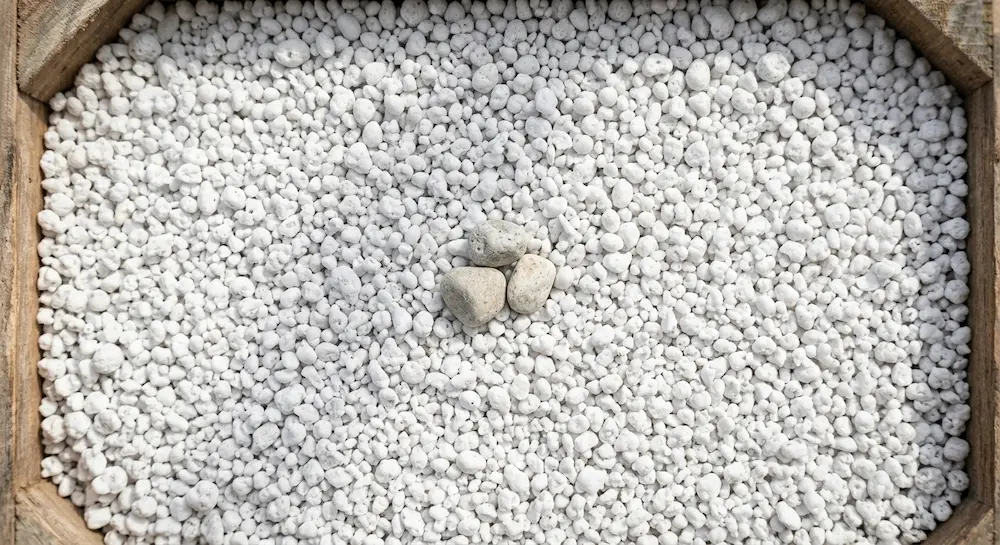
Hydroponics eliminates solid mediums entirely. Instead, plant roots are suspended directly in a nutrient-rich, oxygenated water solution.
Popular Hydroponic Systems:
- Deep Water Culture (DWC): Roots hang continuously inside a bucket of aerated water and nutrient solution.
- Recirculating Deep Water Culture (RDWC): Multiple buckets connected to a central master reservoir with continuous recirculating flow.
- Ebb and Flow (Flood and Drain): Grow trays filled with expanded clay pebbles (hydroton) periodically flooded with nutrient solution.
- Aeroponics: Roots dangle in air tight chambers misted continuously with nutrient water.
Hydroponics Pros & Cons
| Advantages | Disadvantages |
|---|---|
| Explosive Growth Velocity: Fastest vegetative growth and maximum yield potential. | Zero Margin for Error: System failures (e.g., pump failure or hot water) cause root rot or kill plants fast. |
| Complete Input Control: Instant control over pH, water temperature, and nutrient concentrations. | Higher Initial Setup Cost: Requires chillers, air pumps, water meters, and plumbing. |
| Clean Environment: No messy dirt or medium disposal after harvest. | Electricity Dependent: Power outages can jeopardize the crop. |
- Ideal Target pH in Hydroponics: 5.5 - 6.5
Direct Comparison: Different Weed Growing Mediums Side-by-Side
To help compare what are the types of growing mediums for marijuana and how they perform in real-world conditions, review this breakdown:
| Feature / Criteria | Organic Soil | Coco Coir (Soilless) | Hydroponics (DWC) |
|---|---|---|---|
| Difficulty Level | Beginner Friendly | Intermediate | Advanced |
| Growth Speed | Moderate | Fast | Fastest |
| Yield Ceiling | Good | High | Maximum |
| Watering Schedule | Every 2–4 Days | Daily | Automated / Continuous |
| Error Forgiveness | High (Buffers mistakes) | Moderate | Low (Problems escalate fast) |
| Target pH Range | 6.0 - 7.0 | 5.5 - 6.2 | 5.5 - 6.0 |
| Startup Cost | Low | Moderate | Moderate to High |
How to Choose: Which Marijuana Growing Medium Is Right for You?
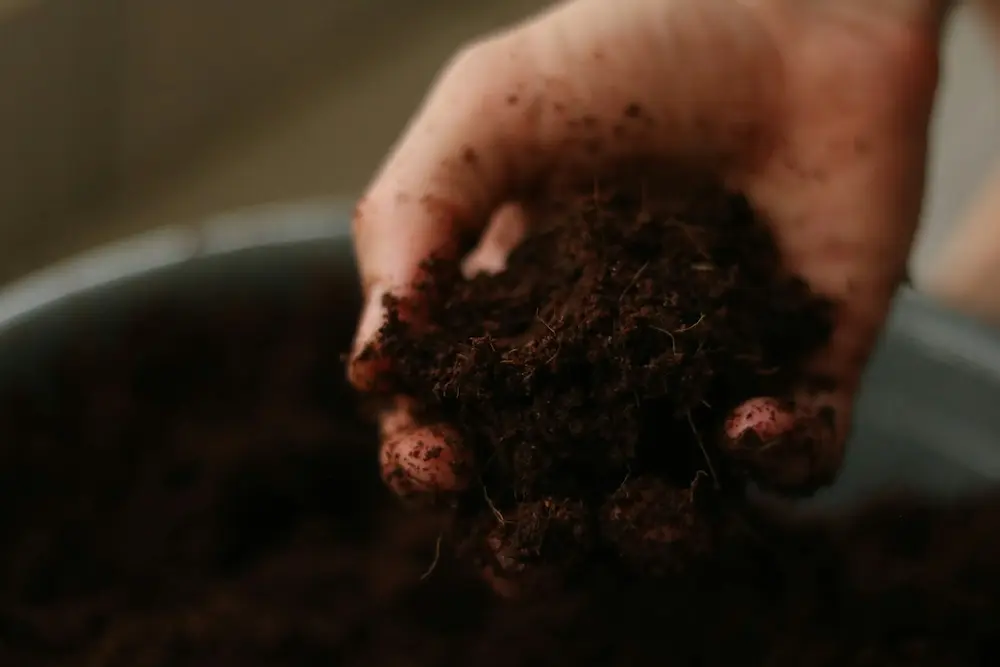
When evaluating different growing mediums for marijuana, match the substrate to your lifestyle and experience level rather than chasing raw yield potential alone.
Choose Soil If:
- You are a first-time grower who wants an forgiving learning curve.
- Your daily schedule is busy, and you can only check your plants every couple of days.
- You prefer organic, low-input growing techniques.
Choose Coco Coir If:
- You want faster vegetative growth and bigger yields without setting up plumbing systems.
- You enjoy daily hands-on care and monitoring pH and nutrient levels.
- You want to reduce the risk of soil-borne pests in your grow room.
Choose Hydroponics If:
- You have a few successful grows under your belt and want total environmental control.
- You want to push plant genetics to their maximum speed and biomass output.
- You are comfortable using digital meters (pH/EC) and maintaining system reservoirs.
Final Thoughts: What Is the Best Growing Medium for Cannabis Overall?
Ultimately, there is no single best growing medium for weed that outperforms all others in every category.
- For ease and forgiveness, organic soil remains the top recommendation for beginners.
- For the ultimate balance of yield, speed, and safety, coco coir is considered by many modern growers to be the sweet spot.
- For raw growth performance and control, hydroponics stands unmatched.
Select the medium that fits your daily routine, invest in a reliable pH meter, and keep your grow space clean. Healthy roots build high-yielding plants regardless of the medium you choose!