

Why These 5 Easy Ways to Increase Cannabis Yields Actually Work
Every grower wants the same thing: heavier, denser, more potent harvests without spending more time or money. The good news is that you don’t need a commercial facility or years of experience. These 5 easy ways to increase cannabis yields work for home growers and small-scale cultivators alike.
A quick note: cannabis cultivation laws vary widely by country, state and region. Always check your local laws before you grow.
Why Learning How to Increase Cannabis Yields Matters
Yield isn’t just about bigger buds. A well-optimized grow wastes less energy, nutrients and space. It also tends to produce more consistent, higher-quality flower. Professional cultivators say the key is to sweat the small stuff and stay consistent, and that advice applies at any scale.
Here are the 5 easy ways to increase cannabis yields, in the order they matter most.
1. Start With High-Yielding Genetics
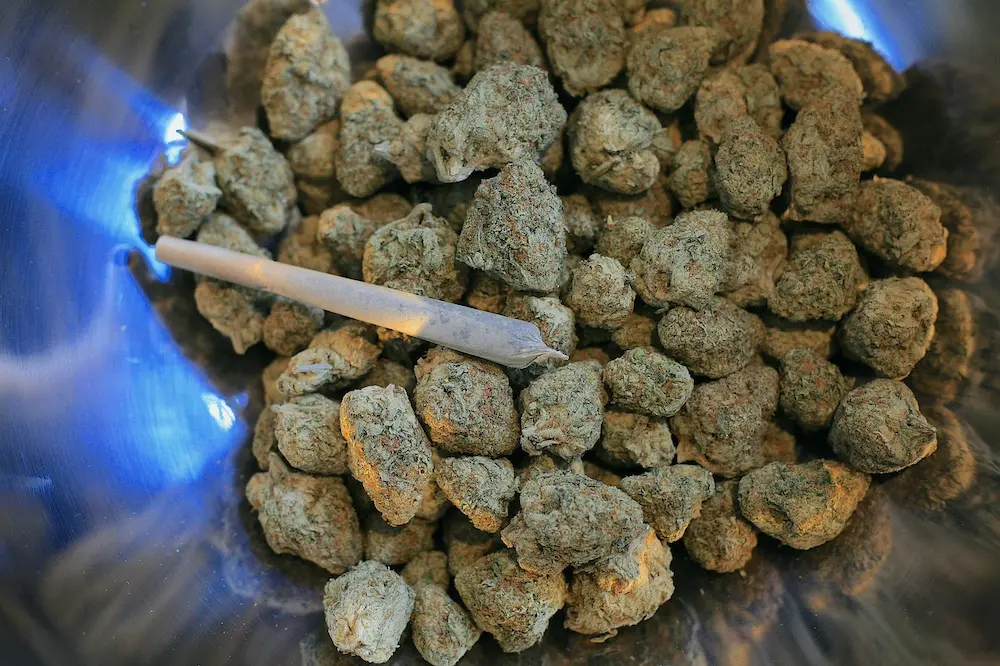
You can’t out-grow bad genetics. Growers who want to increase cannabis yield should start with strains bred for it. One well-known home-grow resource points out that the genetics you start with have a huge effect on your final results and yields.
How to choose:
- Pick proven high-yielders. Look for strains with a documented track record for large harvests, not just a high THC percentage. Many growers still buy seeds based on THC alone, which is a mistake if yield matters to you.
- Match the strain to your space. Tall, stretchy sativa-dominant plants can struggle in a tent, while compact hybrids often use limited space more efficiently.
- Consider stabilized hybrids. These produce more uniform plants, which makes your canopy easier to manage.
- Buy from reputable breeders. Healthy, stable seeds or clones prevent problems before they start.
Pro tip: Autoflowers are fast and beginner-friendly, but photoperiod plants usually give you more control over final size and yield.
Browse seeds through our trusted seed bank Buy 10 seeds get 10 for free
2. Maximize Light, the Biggest Driver of Yield
If you only improve one thing, make it lighting. For most small indoor setups, the most effective way to increase bud size during flowering is to increase light intensity, and anything that gets stronger light to your bud sites tends to raise your final yield.
Easy lighting upgrades:
- Use quality full-spectrum LEDs. For indoor growers looking to maximize yields, top-quality grow lights with the right spectrum for vegetation make a measurable difference.
- Get the distance right. Too far wastes light, and too close causes bleaching and stress. Follow your manufacturer’s hanging guidelines and adjust as plants grow.
- Use reflective walls. Mylar or flat white paint bounces light back to lower bud sites.
- Keep the canopy even. Light drops off quickly with distance, so buds sitting far below the lights stay small and airy.
Many growers aim for roughly 400–600 µmol/m²/s PPFD in veg and 600–1,000 in flower. Check your light’s specifications and your strain’s needs before pushing intensity, because more light also demands more water, nutrients and airflow.
Check our hand-picked grow lights and grow tents for your indoor or outdoor grow.
3. Train Your Plants for an Even Canopy
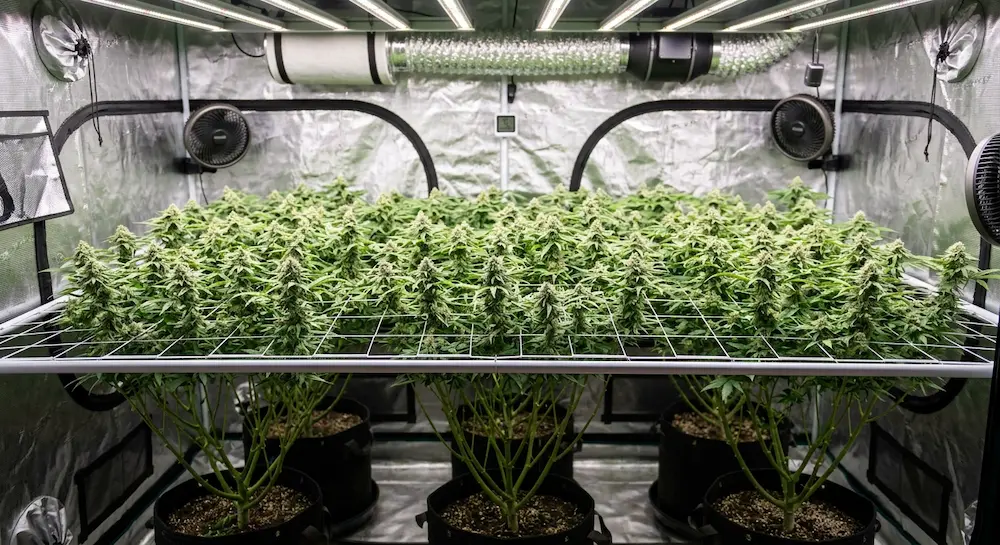
Plant training is one of the cheapest and most effective ways to increase cannabis yield, and it costs nothing but a little time. The idea is simple. Instead of one dominant top cola with weak lower branches, you shape the plant so many bud sites receive equal light. Training plants so that buds sit at roughly the same height from the light produces higher yields than letting plants grow naturally.
Beginner-friendly techniques:
- Low-Stress Training (LST): Gently bending branches creates an even canopy and increases light exposure to lower branches. It’s the safest method for first-timers.
- Topping: Cutting the main tip so the plant grows two main colas instead of one. This promotes bushier growth and multiple colas.
- Defoliation (lightly): Removing a few large fan leaves that block bud sites improves light penetration and airflow.
- Screen of Green (ScrOG): Weaving branches through a horizontal screen to create a flat, productive canopy.
A word of caution: Pruning helps, but it can also cause dangerous levels of stress if overdone. Train gradually, and give plants a few days to recover between major changes.
Related Articles: Definitive low stress training guide, Screen of green guide.
4. Dial In Your Climate: Temperature, Humidity and VPD
Plants only perform well when their environment lets them. Stable, optimal conditions allow faster growth, stronger roots and heavier flowers.
The basics: One guide suggests indoor growers aim for 72–77°F with 60–70% humidity during early growth. Humidity should drop gradually through flowering to reduce the risk of mold and bud rot.
Level up with VPD: More experienced growers manage vapor pressure deficit (VPD) instead of tracking temperature and humidity separately. A commonly cited target is 0.8–1.0 kPa during veg, rising to 1.0–1.4 kPa in flower. Many affordable controllers and apps calculate this for you.
Optional: CO2 enrichment. In a sealed grow room with strong lighting, CO2 can boost results. One source says enrichment can increase photosynthetic efficiency by as much as 30% in a sealed environment compared with ambient levels of around 425 ppm. Another suggests that raising CO2 to 1,000–1,500 ppm during lights-on can lift photosynthetic rates by 20–30%. This only pays off if your light, nutrients and climate are already optimized, so treat it as an advanced step, not a starting point.
Don’t forget:
- Good airflow (oscillating fans) strengthens stems and prevents mold.
- Proper pH (about 6.0–7.0 depending on medium) keeps nutrients available.
- Consistent watering beats frequent overcorrecting.
Check out our hand-picked growing equipment to make your grow easy.
5. Harvest at the Right Time
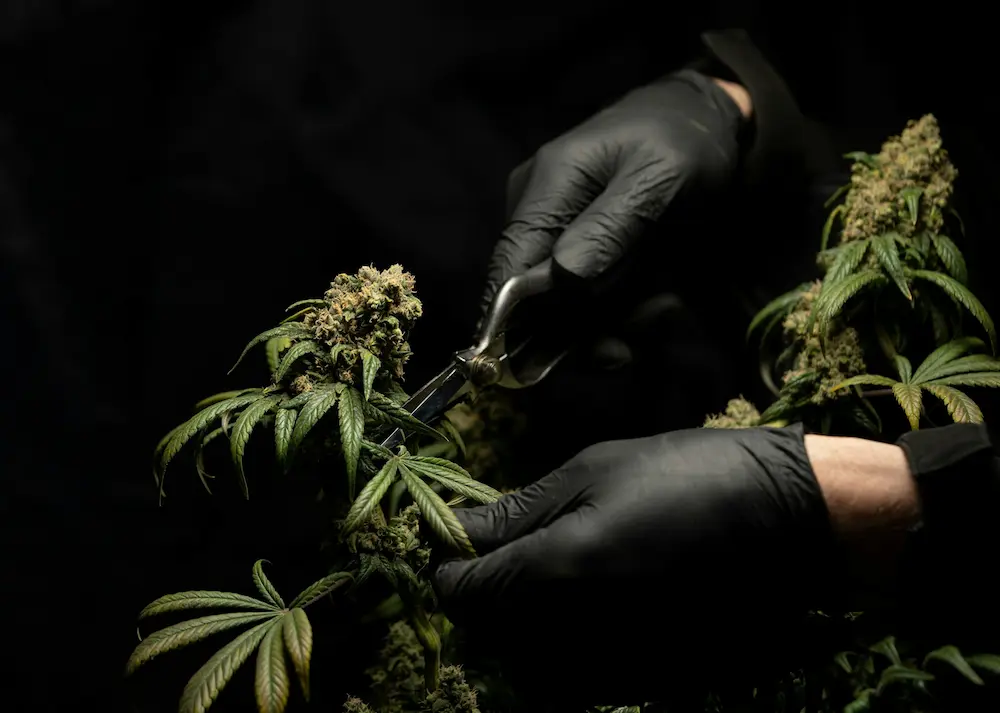
Even a perfect grow can lose yield and potency with sloppy timing. The timing of the harvest is crucial to achieving maximum yields.
How to know it’s time:
- Check the trichomes. Use a jeweler’s loupe or digital microscope. Mostly cloudy trichomes with some amber usually signal peak harvest time. Clear means too early, and mostly amber means a more sedating, less potent flower.
- Watch the pistils. Most should have darkened and curled in.
- Don’t harvest early to “save time.” Buds put on a surprising amount of weight in the last couple of weeks.
Finish strong: Proper drying (slow, around 60°F/60% RH for roughly 7–14 days) and curing preserve weight, aroma and potency, so you keep what you grew.
Common Mistakes That Hurt Your Cannabis Yield
- Overfeeding. More nutrients does not mean more yield. Nutrient burn stunts growth.
- Overwatering. This is the most common beginner error and suffocates roots.
- Ignoring pests early. Check leaves weekly for mites, thrips and fungus gnats.
- Changing too many variables at once. Adjust one thing at a time so you know what worked.
- Skipping records. Track your lights, feeding, climate and results so each grow beats the last.
Final Thoughts: Your Roadmap to Bigger Harvests
To recap, these 5 easy ways to increase cannabis yields are:
- Start with high-yielding genetics
- Maximize light intensity and coverage
- Train plants for an even canopy
- Dial in temperature, humidity and VPD
- Harvest at the right time
Master these fundamentals before moving on to advanced upgrades. Small, consistent improvements add up to dramatically bigger harvests.
Disclaimer: This article is for educational purposes only. Cannabis laws differ by location, so grow only where it is legal.